
Branding vs Logo Design: What South African Businesses Actually Need
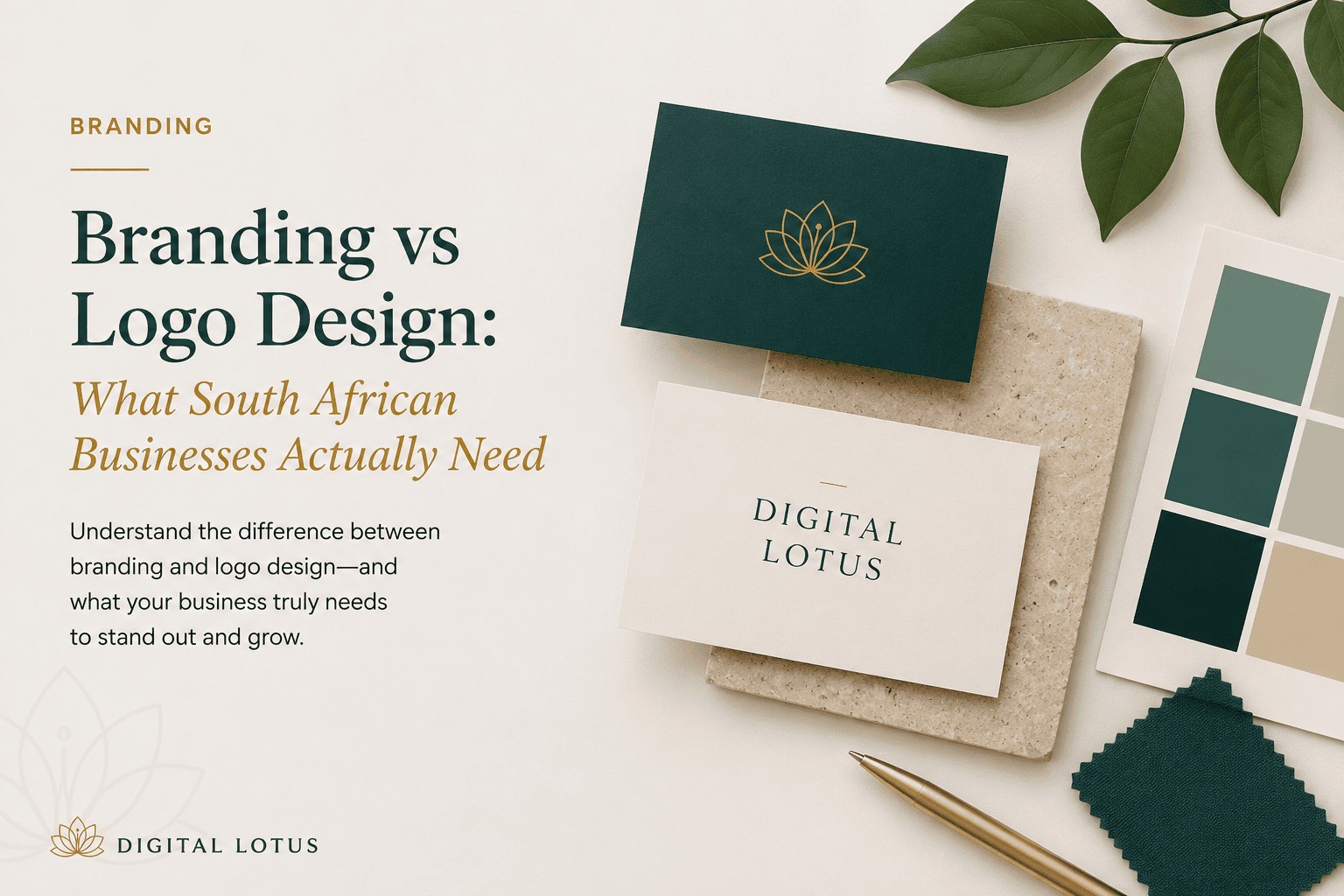
A logo is a visual mark that identifies a business. Branding is the full system of how that business looks, sounds, and feels across every touchpoint: the website, the packaging, the email footer, the social media presence, and the way client communications are written.
The two are related but they are not the same thing. Buying one when the other is needed is a mistake that costs more to fix later than it would have cost to get right the first time.
What a logo does, and does not do
A logo identifies the business. It goes on the letterhead, the website, the signage, and the social media profile. A well-designed logo is simple, distinctive, and works across different sizes and backgrounds.
What it does not do: tell a web developer what font to use on the site. Tell a printer what shade of green the brand uses. Tell a social media manager what the visual style of Instagram posts should look like. Without the supporting system, everyone who touches the brand in future makes their own interpretation. That inconsistency chips away at how professional the business looks over time.
What branding actually covers
Brand identity, the visual dimension of branding, is the system built around the logo. It includes the colour palette, the typography, the photographic style, the graphic elements, and the rules for how all of these work together across applications.
When someone encounters a business across three different channels and it feels like the same company each time, that is brand identity working correctly. When the website feels like it belongs to a different business than the business card, that is what happens without it.
Why South African businesses often buy the wrong thing
The pattern is common. A new business needs something to put on the website and social media quickly, so a logo is commissioned or downloaded from a marketplace, and the broader branding gets deferred until “later.” Later rarely arrives on schedule, and the business ends up with a logo that does not connect to anything, applied inconsistently everywhere.
It is not a failure of planning. It is a resource and priority issue that affects most early-stage businesses. But it is worth knowing that rebuilding a brand identity once the business has grown and the inconsistency has compounded costs more in time and money than building it properly from the start.
What to buy and when
If the business is in its first few weeks and the priority is simply getting live, a logo is a reasonable first step. The key condition is to receive the original source files, such as AI or EPS format, not just a PNG, so a designer can extend the brand properly later without starting from scratch.
If the business is established, growing, or going through a significant change such as entering a new market, changing pricing structure, or rebranding after a pivot, a full brand identity is the right investment. It creates the foundation everything else builds on, from the website to the pitch deck to the email templates.
If the business is already generating consistent leads and the current branding is working well enough, the budget is better directed at whatever channel is actually underperforming. Branding is not the answer to every business problem.
The question worth asking
Do people recognise the business instantly across all the places they encounter it? Does the brand look as credible and polished as the quality of work it actually delivers? If the honest answer to either question is no, that is where brand identity investment makes sense.
A logo gets the business visible. A brand identity makes it memorable.